Spalling Concrete on an HDB Ceiling: Why It Happens and How It Is Repaired
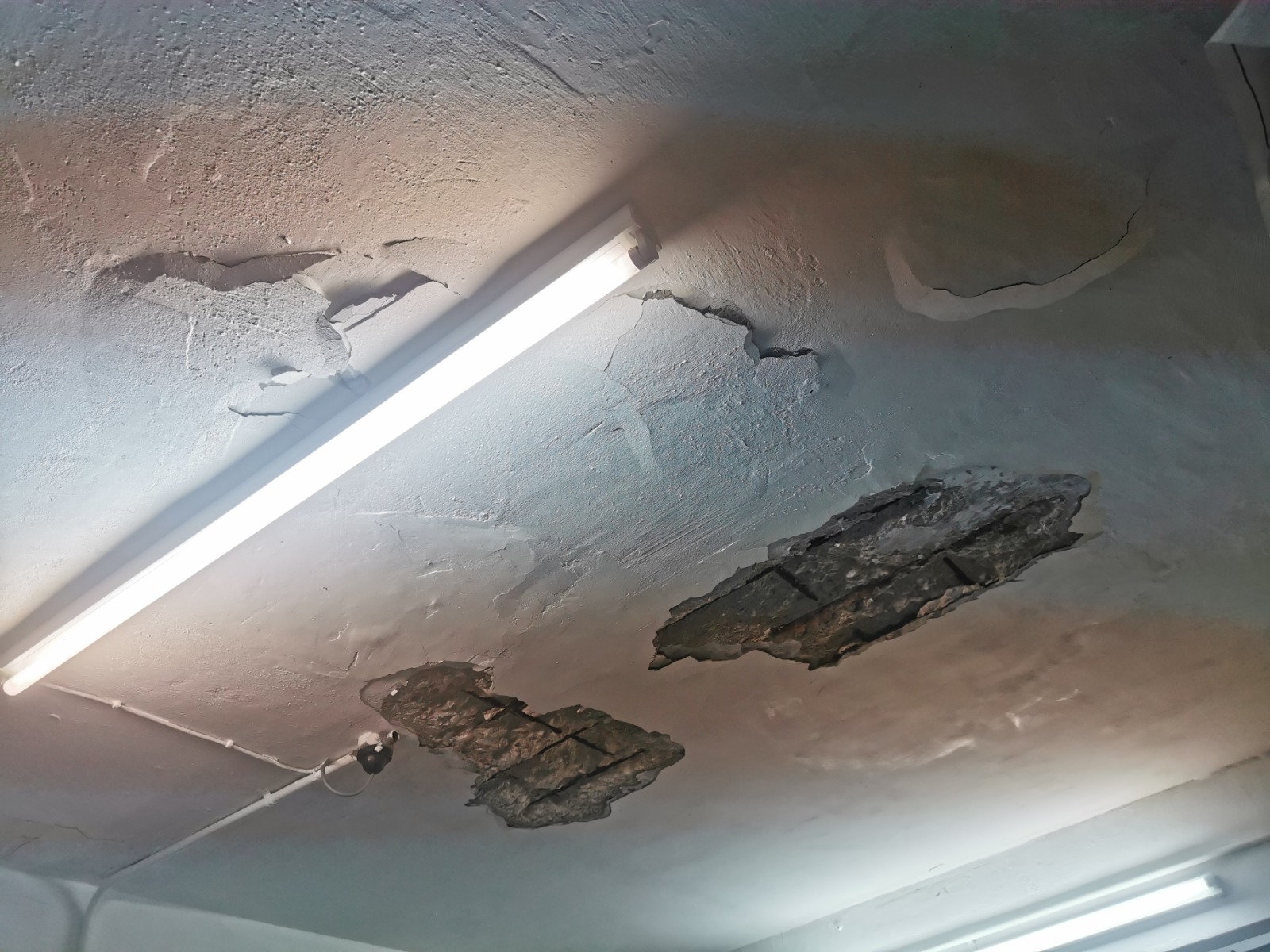
Spalling concrete looks alarming and usually is not an emergency — but it is a countdown. A patch of ceiling bulges, cracks, then drops, and behind it you find steel reinforcement the colour of rust. It is one of the most common maintenance problems in older Singapore flats, and it is almost always the end of a slow chemical process rather than the result of a single event.
What is actually happening
Concrete protects the steel inside it by being strongly alkaline. Over years, carbon dioxide from the air reacts with the concrete surface and gradually lowers that alkalinity — a process called carbonation. Once the carbonated zone reaches the reinforcement bars, they lose their chemical protection and begin to corrode.
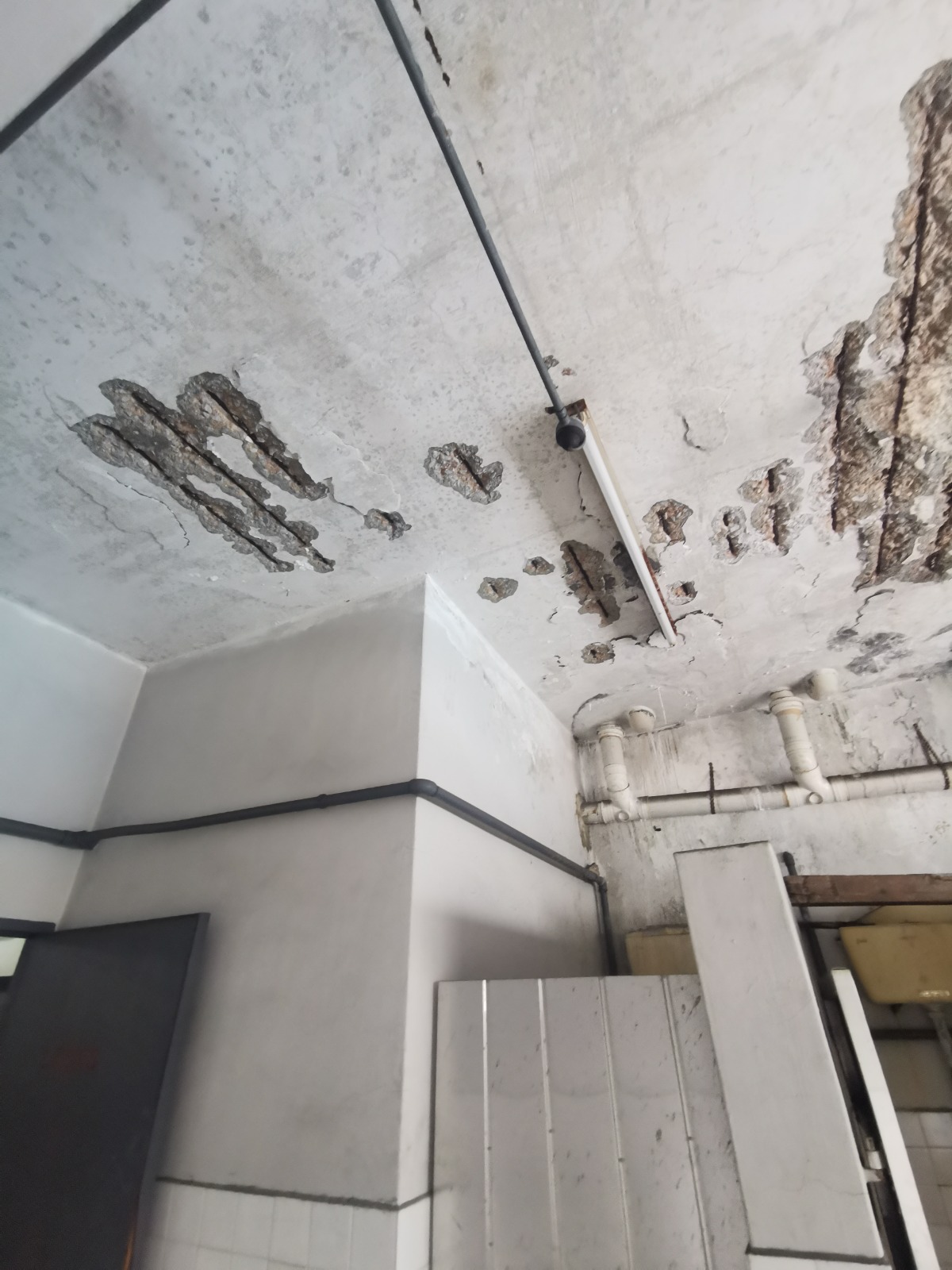
Rust occupies far more volume than the steel it replaces. That expansion pushes outwards from inside the slab, which is why the concrete cover cracks, bulges and eventually falls away. Humidity speeds the whole process up, which is why it shows first in kitchens, toilets and other damp areas.
Spalling is not, by itself, a leak. But damp accelerates it — and if there is water coming through the slab, a cosmetic patch repair will fail again in the same spot.
The warning signs, in the order they appear
- Rust-coloured staining bleeding through paint, often in a line that follows a bar.
- Hairline cracks running in a straight line rather than a random pattern.
- Bulging or blistered concrete that sounds hollow when tapped — the cover has already delaminated even though nothing has fallen yet.
- Exposed reinforcement, which means the cover is gone and corrosion is now open to the air.
A contractor will often confirm the extent by tapping across the ceiling with a rod. A dull, hollow sound marks concrete that has separated from the slab, and that area is larger than the visible damage almost every time.
How a repair that lasts is done
- 1
Remove all loose and delaminated concrete
Cut back to sound material well beyond the visible damage. Anything left hollow will fail again.
- 2
Clean the reinforcement
Scrape and wire-brush corrosion off the exposed bars until clean steel shows. Rust left in place keeps expanding under the patch.
- 3
Apply an anti-corrosion coating
A protective coat over the bars re-establishes the barrier that carbonation destroyed.
- 4
Repatch with a repair mortar
Build the cover back to its original depth so the steel is properly buried again.
- 5
Coat the wider surface
A corrosion-retardant or anti-carbonation coating over the whole ceiling slows the process everywhere, not just where it has already broken out.
That last step is the difference between a repair and a patch. HDB uses the same logic in the enhanced Corrosion Resistant Repair method applied to toilets under later Home Improvement Programme batches, where a corrosion-retardant coating is applied across the entire toilet ceiling rather than only over the repaired area.
Who is responsible
Inside your flat, spalling concrete is the owner’s responsibility to prevent and repair. Small areas can be handled as a DIY job; larger ones should not be left, because loose concrete overhead is a genuine safety risk and the affected area only grows. HDB does co-pay 50% of spalling repairs under its assistance scheme, with the balance borne by the affected resident — a different split from the one used for inter-floor leaks.
Prevention is unusually effective here
- Keep the ceiling painted — paint is a real barrier against carbon dioxide and moisture, not just decoration
- Seal cracks and holes as soon as you see them, including disused drill holes left behind by removed fittings
- Ventilate damp rooms so humidity does not sit against the slab
- Fix any leak overhead first, because damp concrete carbonates and corrodes faster
If the spalling sits directly under a wet area and keeps returning after repair, the real problem is usually the waterproofing above it. Repairing the ceiling again without addressing that is money spent twice.
Frequently asked
What causes spalling concrete in HDB flats?
Carbonation. Carbon dioxide in the air gradually reduces the alkalinity of the concrete surface, and once the carbonated layer reaches the steel reinforcement the bars begin to corrode. Rust expands, which cracks and pushes off the concrete cover. High humidity accelerates the process, so it appears earliest in kitchens and toilets.
Is spalling concrete dangerous?
It should not be ignored. Loose concrete overhead can fall, and left unattended the affected area spreads and progressively weakens the section. Small areas can be repaired as a minor job; larger areas warrant a contractor promptly.
Does spalling concrete mean I have a leak?
Not necessarily — carbonation happens without any leak at all. But moisture speeds it up considerably, so spalling that keeps returning in the same spot under a bathroom or kitchen is often a sign that water is still reaching the slab.
Where this information comes from
All guidesKeep reading
HDB Ceiling Leak: How the Goodwill Repair Assistance Scheme Splits the Cost
HDB co-pays half of an inter-floor leak repair. Here is how the rest is shared, and what the scheme will not cover.
Leak DiagnosisWhite Powder, Dark Patches, Blistering Paint: Reading Water Stains on Walls
Efflorescence is proof that water is moving through the structure. How to read what a wall is telling you.