HDB Ceiling Leak: How the Goodwill Repair Assistance Scheme Splits the Cost
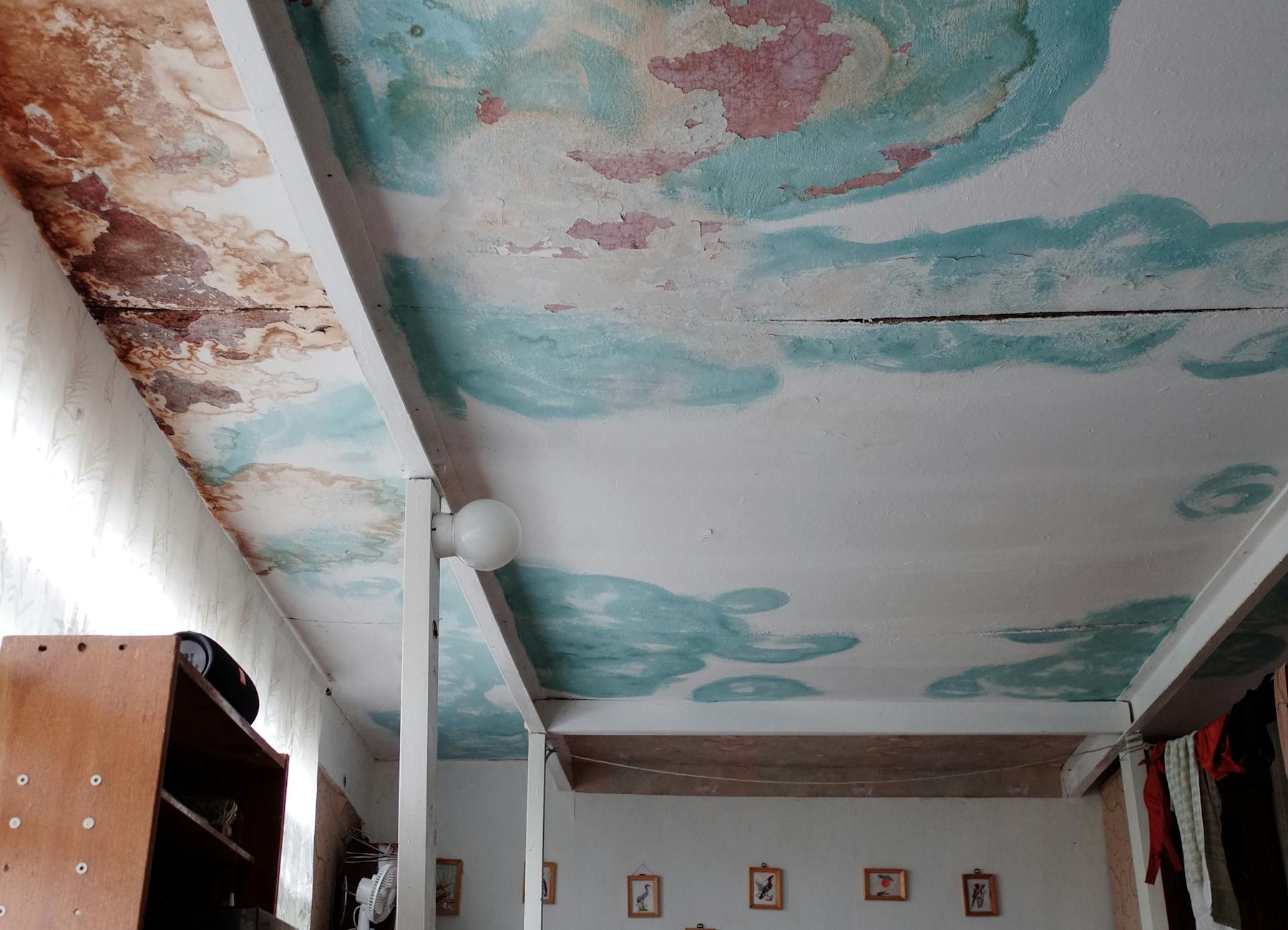
A wet patch on your HDB ceiling is rarely just your problem. The floor slab between two flats is a party structure — it belongs to both households — so HDB treats repairing a leak in it as a joint responsibility between the upper-floor and lower-floor owners. That single fact shapes everything that follows: who you talk to first, who pays, and how long it takes.
The Goodwill Repair Assistance (GRA) scheme exists to stop that shared responsibility from turning into a stalemate. Here is how it actually works, and where it stops.
The cost split, in plain numbers
For an inter-floor leak caused by wear and tear of the waterproofing and screed in the floor slab, HDB co-pays half the repair cost. The remaining half is shared equally between the two flats:
HDB
Co-pays 50% of the repair cost under the scheme.
Upper-floor flat
Pays 25% — the works are mostly in this unit.
Lower-floor flat
Pays 25% — the unit where the leak shows up.
Both flat owners have to agree before the scheme can proceed. If the upper-floor owner will not take part, GRA cannot be used and the matter has to be resolved another way.
What the scheme pays for
Once both owners consent, HDB arranges the contractor. The scope is aimed squarely at the slab and the two surfaces either side of it, and typically covers:
- Laying a new waterproofing membrane on the floor of the upper-floor unit
- Skim coating, sealing and painting the ceiling of the lower-floor unit
- The associated removal and reinstatement of finishes needed to reach the slab
Note what is absent from that list. The scheme repairs the structure. It does not compensate anyone for what the water ruined on the way down.
What it does not cover
- Damage to your fixtures and fittings — a soaked false ceiling, warped carpentry, stained curtains or a ruined light fitting are not part of the scope.
- Leaks that are not from the party structure. If the water is coming from a supply pipe inside a flat, a leaking cistern or a failed waste connection, the scheme does not apply and the flat owner engages their own contractor.
- Top-floor units. Water coming through a top-floor ceiling usually originates at the block roof, which is a Town Council matter rather than a GRA one.
- Second-floor leaks into the void deck, where the cost is shared between the Town Council and the flat owner instead.
Spalling concrete is treated differently. HDB also co-pays 50% there, but the balance is borne by the affected resident alone rather than split between two flats.
Prove the source before you argue about the money
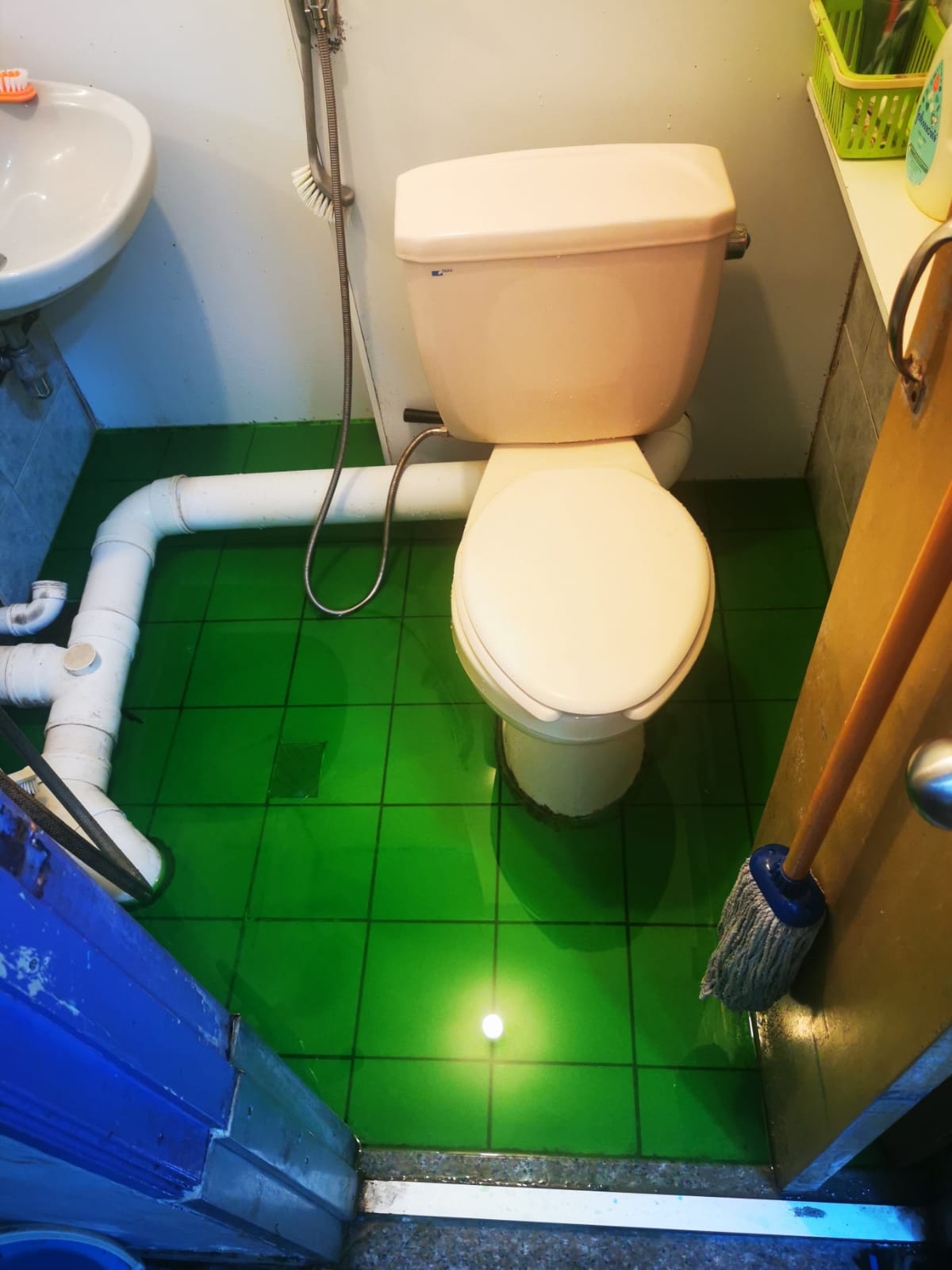
The fastest GRA cases are the ones where nobody has to be convinced. A leak that is documented — photographs with dates, a moisture-meter reading, a dyed ponding test showing colour arriving in the lower ceiling — turns a neighbourly disagreement into a shared, provable fact. That is the whole point of a proper diagnosis, and it is why we run a four-point inspection before recommending any repair.
It also protects you from the opposite error: paying to re-waterproof a bathroom when the water was actually tracking along a concealed pipe. See the meter test for a quick way to separate the two.
A sensible order of steps
- 1
Photograph everything, early
Date-stamped photos of the stain as it spreads are the most useful evidence you will ever collect, and they cost nothing.
- 2
Talk to your neighbour first
HDB’s own advice is to approach the upper-floor household at the first sign of a leak. Most cases are resolved here.
- 3
Get the source confirmed
A ponding or dye test establishes whether the water is coming through the slab, from a pipe, or from somewhere else entirely.
- 4
Decide the route
Joint agreement plus GRA, a privately engaged contractor, or — if the leak is not from the slab — a repair inside one flat only.
- 5
Fix the cause, then the ceiling
Skimming and painting a stained ceiling before the source is sealed simply buys a few dry months.
Scheme terms, eligibility and cost shares are set by HDB and can change. Confirm the current position with HDB or your branch office before you commit to anything.
Frequently asked
Who pays for an HDB inter-floor ceiling leak?
The floor slab between two flats is a party structure, so repairing a leak in it is a joint responsibility of the upper and lower flat owners. Under the Goodwill Repair Assistance scheme HDB co-pays 50% of the repair cost and the two households share the remaining 50% equally, at 25% each.
What if my upstairs neighbour refuses to cooperate?
Both owners must consent for the Goodwill Repair Assistance scheme to be used. If your neighbour will not take part, the scheme is unavailable and the dispute has to be pursued separately. Documented evidence of the source — photographs, moisture readings, a dyed ponding test — is what usually moves a reluctant neighbour, because it removes the argument about where the water is coming from.
Does the scheme pay for my damaged renovation?
No. The scheme is meant to repair the leak in the floor slab. Damage to personal fixtures and fittings, such as a soaked false ceiling or ruined carpentry, is outside its scope.
My flat is on the top floor. Does this apply?
Usually not. Water coming through a top-floor ceiling generally originates at the block roof, which is handled by the Town Council rather than through the Goodwill Repair Assistance scheme.
Where this information comes from
- HDB Home Care Guide — Preventing and Fixing Ceiling Leaks in HDB Flats
- Ministry of National Development — written answers on the Goodwill Repair Assistance scheme
Keep reading
Why Your HDB Bathroom Leaks to the Room Below — and How to Fix It Properly
Damp ceilings and bubbling paint below a bathroom almost always trace back to one of four failures.
MaintenanceSpalling Concrete on an HDB Ceiling: Why It Happens and How It Is Repaired
Rust stains and bulging patches are carbonation reaching the steel. What causes spalling, and what a lasting repair looks like.