
Condensation or a Leak? How to Tell Damp Apart in Singapore’s Humidity
Singapore gives you humidity all year and rain in serious quantities for much of it. That combination produces damp patches with three completely different causes and one identical appearance — and the wrong diagnosis means paying for waterproofing you did not need, or ignoring a leak that is quietly corroding a slab.
The three candidates are condensation, an air-conditioning drainage problem, and genuine water ingress. They can be separated without opening anything up.
1. Condensation
Condensation forms when warm, moist air meets a surface colder than its dew point. In a tropical flat with air conditioning, cold surfaces are everywhere: chilled water pipes, aircon trunking, the wall behind a fan coil unit, glazing, and cold-water risers.
- Appears as fine droplets or an even film rather than a spreading stain with an edge
- Worst while the air conditioning is running, and dries out when it is off
- Concentrated on or immediately around a cold surface
- No brown or rust discolouration and no mineral deposit
- Often accompanied by musty smell and surface mould rather than blistering
2. Aircon condensate that is not draining
This one masquerades as a ceiling leak more convincingly than anything else. Every fan coil unit produces condensate, and it has to drain somewhere. When the drain pan or its pipe blocks — algae, dust, a sagging run with no fall — the water overflows and appears on the ceiling or the wall below, usually near the unit.
- The damp is close to a fan coil unit, its drain line or the riser it discharges into
- It appears or worsens after the aircon has been running for a while
- It stops entirely if the unit is switched off for a day
- There has been no recent rain to correlate with
This is a servicing job rather than a waterproofing one. Clearing the drain usually resolves it completely — and it is worth ruling out before anyone quotes to hack a ceiling.
3. Real water ingress
A leak looks different from condensation once you know what to look at. Water arriving through a structure carries dissolved material with it and leaves evidence behind.
Reads as a leak
- A stain with a defined edge or tide mark
- The patch grows over weeks
- Brown, yellow or rust-coloured discolouration
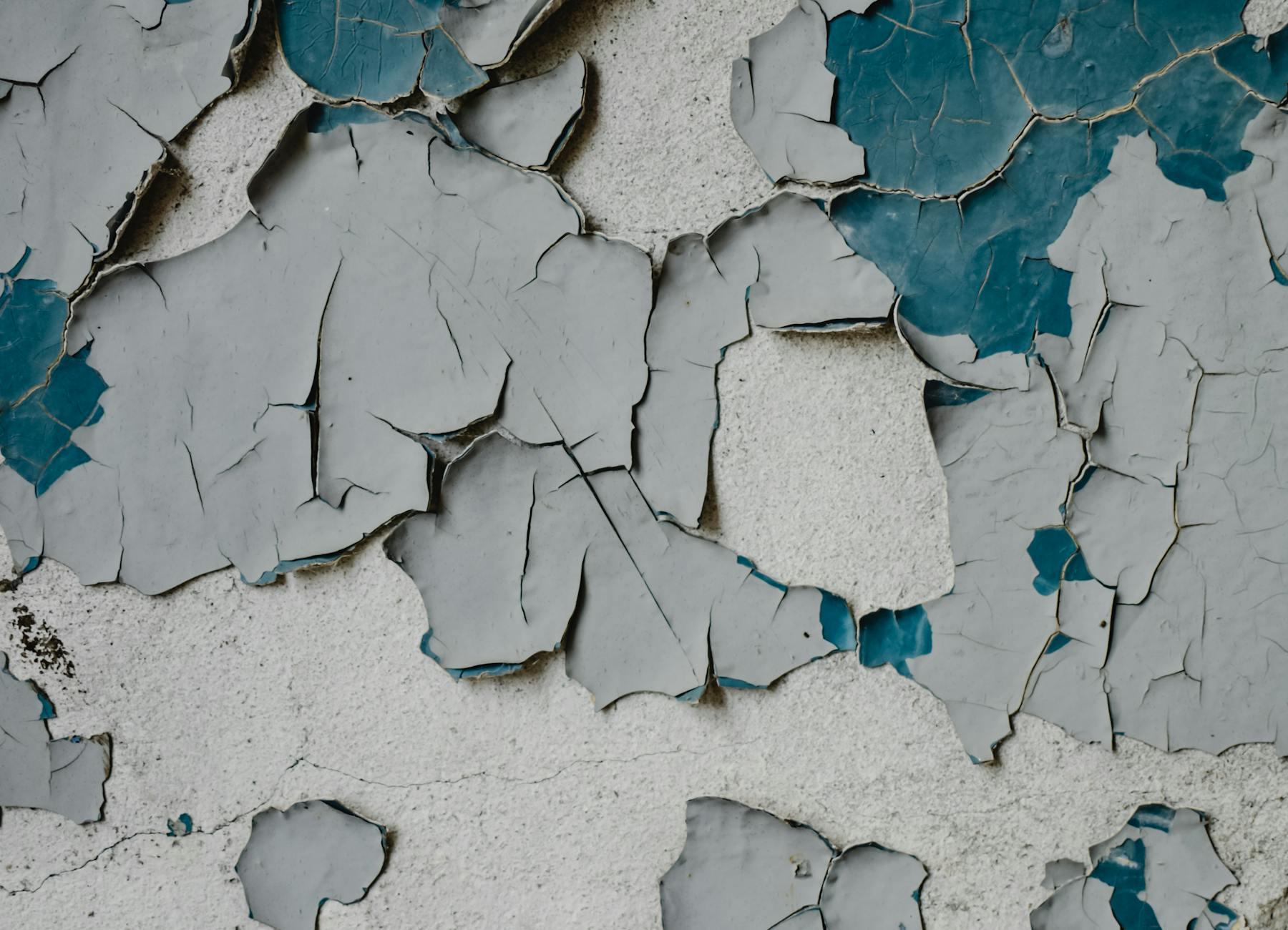
- Paint blistering and lifting away from the substrate
- White crystalline deposits at the edges
- Worse during or shortly after heavy rain
Reads as condensation
- Droplets or an even damp film
- Same size day to day
- No colour change in the stain
- Surface mould rather than blistering
- No mineral deposit
- Tracks aircon use, not weather
If white powder is part of the picture, read what efflorescence tells you — it is close to proof that liquid water is moving through the wall.
The plastic sheet test — 48 hours, no tools
This is the standard way to separate surface condensation from moisture coming through a structure, and you can run it yourself:
- 1
Dry the area thoroughly
Wipe the patch and let it dry completely first. Warm, moving air helps.
- 2
Tape down a sheet
Tape a 300mm square of clear plastic or aluminium foil flat over the patch, sealed on all four edges.
- 3
Leave it 24 to 48 hours
Long enough for a slow-moving process to show itself.
- 4
Look at which face is wet
Moisture on the room side of the sheet is condensation. Moisture trapped between the sheet and the wall means water is coming through the structure.
Let the weather do some of the diagnosis
Rain correlation is a strong signal, and Singapore’s seasons are regular enough to use. The Northeast Monsoon runs from December to early March and December is typically the wettest month; the Southwest Monsoon runs from June to September and brings the morning Sumatra squalls; the inter-monsoon periods in April–May and October–November bring frequent afternoon thunderstorms.
Damp that appears within hours of heavy rain and fades in dry weeks points outward — roof, façade, window perimeter, balcony or planter. Damp that ignores the weather entirely and follows the air conditioning points inward. Our monsoon checklist covers the external side.
One caution: condensation is not harmless. Persistently damp surfaces grow mould and accelerate carbonation in concrete. Fixing ventilation and insulation matters even when there is no leak.
Frequently asked
How can I tell condensation from a leak?
Condensation shows as droplets or an even damp film on cold surfaces, tracks air-conditioning use, does not discolour and does not grow. A leak leaves a stain with a defined edge that spreads over time, often discolours brown or rust, blisters paint and frequently correlates with rainfall. Taping a sealed square of plastic over the dried patch for 24 to 48 hours settles it: moisture on the room side is condensation, moisture behind the sheet is water coming through the structure.
Why is my ceiling wet only when the aircon is on?
Almost always a condensate drainage problem rather than a leak. When the drain pan or drain pipe of a fan coil unit blocks, condensate overflows and shows up on the ceiling or wall nearby. Switching the unit off for a day and seeing the damp stop confirms it.
Is condensation damage something a waterproofing contractor fixes?
Usually not. Condensation is solved by ventilation, insulating cold surfaces and servicing air conditioning. A reputable contractor should tell you that rather than quote to waterproof something that is not leaking.
Where this information comes from
All guidesKeep reading
Water Bill Suddenly High? The 10-Minute Meter Test That Finds Hidden Leaks
PUB’s meter test tells you in ten minutes whether water is escaping — and whether the problem is plumbing or waterproofing.
Leak DiagnosisWhite Powder, Dark Patches, Blistering Paint: Reading Water Stains on Walls
Efflorescence is proof that water is moving through the structure. How to read what a wall is telling you.