
The 24-Hour Water Ponding Test: How Waterproofing Is Actually Proven
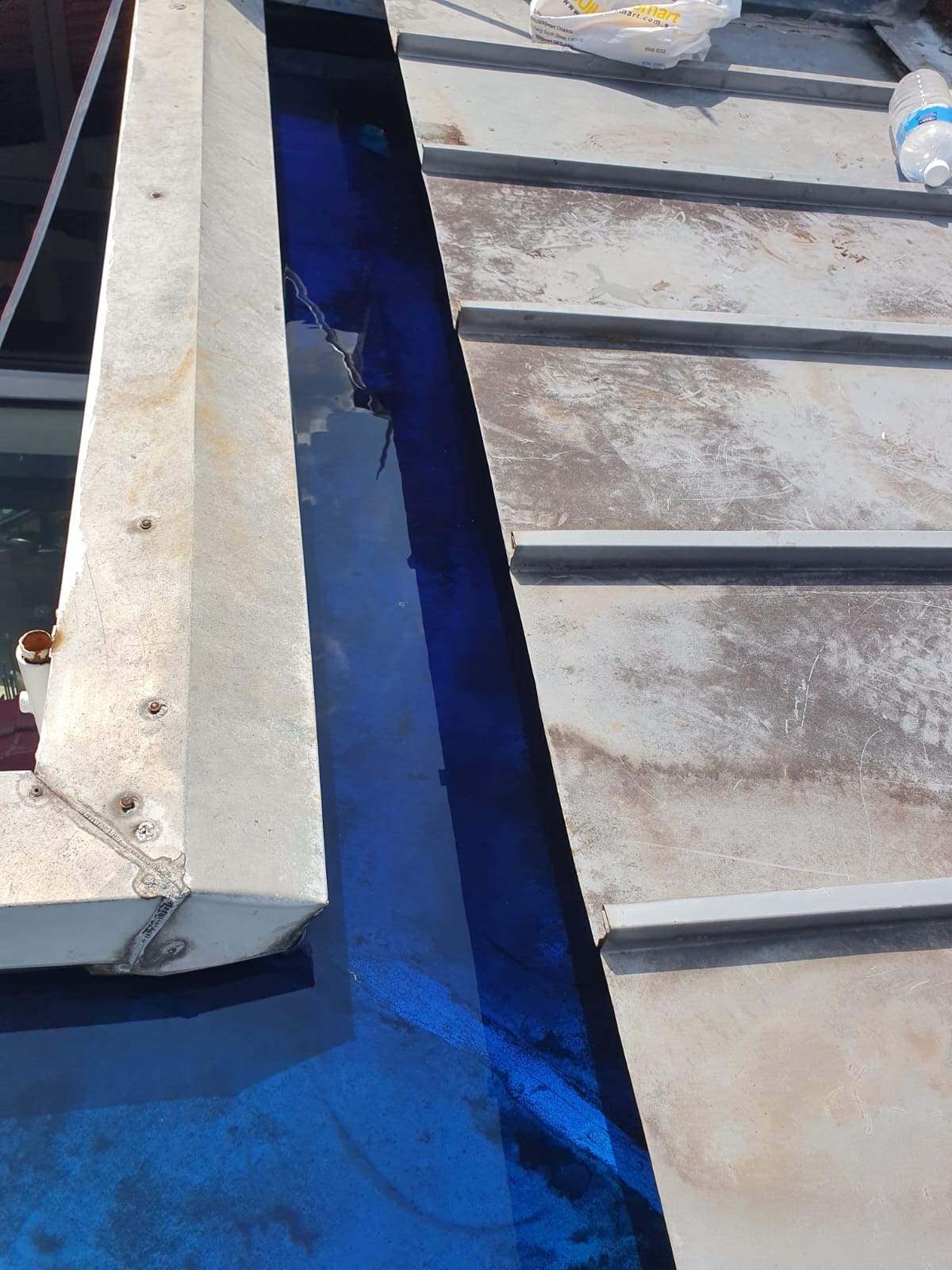
Everything else in waterproofing is a claim. The ponding test is the only part that is a measurement. You block the outlets, fill the area with water, leave it, and look underneath — either water gets through or it does not.
It is also the step most often shortened, skipped or quietly reported rather than actually run, which is why it is worth understanding what a proper one looks like.
What the test involves
- 1
Seal the outlets
Floor traps and any other drainage points are plugged so the water stays put.
- 2
Fill the area
Water is ponded across the whole floor, deep enough to cover the surface and reach the base of any upturn being tested — typically 25mm or more.
- 3
Mark the level and the time
A datum mark lets you see whether the level drops, which is itself a signal even without visible seepage below.
- 4
Hold it for the full duration
The current Singapore standard for wet areas is 24 hours. Older practice used 12, and shorter still is common on site — a slow defect can pass a short test comfortably.
- 5
Inspect below and around
Check the ceiling of the space beneath, the adjacent rooms at floor level, and any exposed slab soffit.
- 6
Drain, dry, and re-inspect
Some seepage only becomes visible after the water has gone.
SS 637 : 2018, Singapore’s code of practice for waterproofing of buildings, extended the wet area ponding test duration to 24 hours. If a contractor proposes two hours, they are not testing to the current standard.
Why 24 hours instead of 12
Because failures are rarely dramatic. A pinhole at a pipe penetration, an unbonded lap in a membrane or a hairline crack in screed passes water slowly — the volume that makes it through in two hours may not be enough to appear on the far side of a 150mm slab at all. Extending the duration lets a slow path saturate the intervening material and show itself.
Longer holds also apply more realistic pressure. A shower floor is not under 25mm of standing water for a day in normal use, but it is wetted repeatedly over years — and the test is standing in for that cumulative exposure.
What a dye trace adds
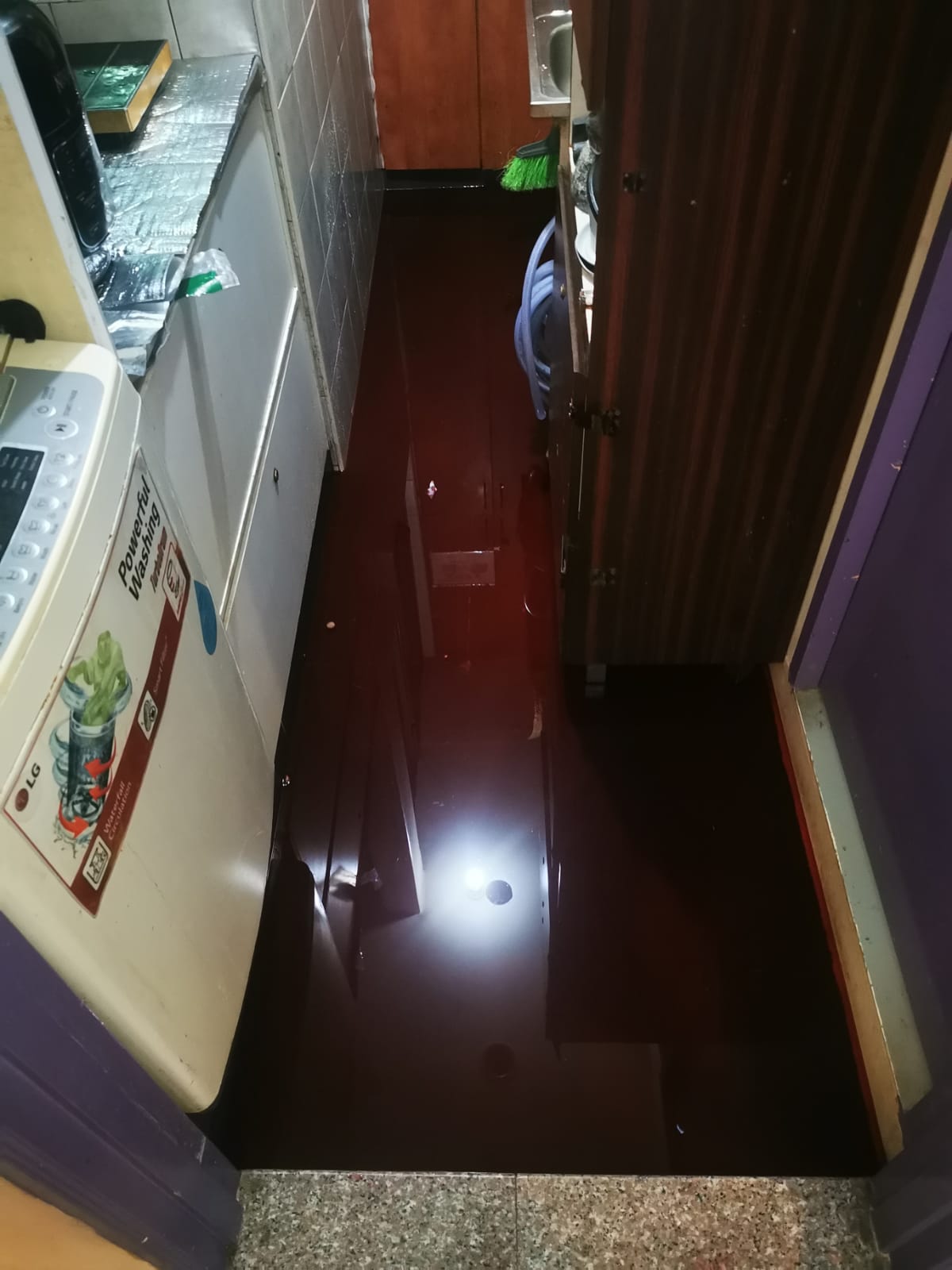
Adding a coloured tracer to the ponded water converts an ambiguous stain into an unambiguous one. Damp appearing below could always be argued to be condensation, an old stain rehydrating, or water from somewhere else entirely. Coloured water cannot be argued with.
- Confirms the specific area under test is the source, not a neighbouring one
- Distinguishes a slab leak from a concealed pipe leak in the same ceiling void
- Provides evidence a neighbour or an MCST will accept
- Lets you test two areas separately using different colours
That evidentiary value matters in shared-structure disputes. For an HDB inter-floor case, it is often what unlocks a Goodwill Repair Assistance application, because both households can see the same result.
What ponding cannot tell you
The test has real blind spots, and honest contractors say so:
- Wall and splash failures. Ponding loads the floor. A membrane upturn that stops 50mm too low fails when someone showers, not when the floor is flooded.
- Pipe leaks. A pressurised supply pipe leaking inside a wall behaves identically whether or not the floor is ponded — pair it with a meter test.
- Rain-driven ingress. External wall and window perimeter leaks need a spray test, not a ponding test.
- Movement-related cracking. A crack that opens under thermal or structural movement may be closed on the day of the test.
Ponding as a defect check, not just a completion check
The same test also finds a different defect: standing water that will not drain. BCA’s Quality Mark assessment for wet areas treats water ponding as a workmanship defect, checking that floors fall towards the drainage outlet so water clears. A floor can be perfectly watertight and still be badly built if it holds a puddle after every shower.
- Water clears fully towards the floor trap once the plug is removed
- No residual puddle away from the outlet
- Falls are consistent, without a low spot in the middle of the floor
Insist that the test is witnessed and recorded. A dated photograph of the ponded area with the start time, and another of the ceiling below at the end, is worth more than a line item on an invoice.
Frequently asked
How long should a water ponding test last?
Twenty-four hours for wet areas under SS 637 : 2018, Singapore’s code of practice for waterproofing of buildings. Earlier practice used 12 hours. Anything shorter risks passing a slow defect, because a pinhole may take many hours to show through a slab.
What is a dye test and do I need one?
A coloured tracer is added to the ponded water so that any seepage appearing below is unmistakably from the area being tested. It is particularly valuable in inter-floor disputes and where a concealed pipe leak and a slab leak could produce the same stain.
My bathroom passed a ponding test but still leaks. How?
Ponding only loads the floor. It will not reveal a wall membrane that was stopped too low, a leaking supply pipe inside a wall, rain-driven ingress through an external wall, or a crack that only opens under movement. Those need shower, spray or pressure testing instead.
Where this information comes from
- SS 637 : 2018 — Code of practice for waterproofing of buildings (Singapore Standards eShop)
- BCA — Quality Mark for Good Workmanship Scheme
Keep reading
HDB Renovation and Waterproofing: The 3-Year Rule, Permits and Water Tests
When you may hack toilet finishes, when you need a permit, and the membrane details that decide whether it stays dry.
MethodsWaterproofing Membranes Compared: Cementitious, PU, Acrylic and Torch-On
Each system fails in a different way. How to match the membrane to the surface, the exposure and the water it must hold.